Defend Able Mechanical Mod: Performance And Reliability
Contents
The Defend Able is a mechanical mod: a simple battery tube with no chip or circuit board. Mods like this are built for durability and direct power, not for features.
We could not find an official manufacturer spec page for the Defend Able, so this guide covers how mechanical mods of this type work and how to use them safely. Check the exact materials and connection type with your seller before you buy.
Key Takeaways
- The Defend Able is a mechanical mod with no electronic protection.
- Mechanical mods put battery safety entirely in the user's hands.
- Only experienced users who understand Ohm's law should run one.
Defend Able Mechanical Mod Overview
Mechanical mods like the Defend Able use a solid tube, direct power delivery and rebuildable atomizers. They appeal to advanced users who want a simple, durable device.
Key Features and Construction
Mechanical mods are usually made of copper, brass or stainless steel, since these metals conduct electricity well. Some offer interchangeable sleeves that change the look without affecting performance.
Many use a hybrid top cap, where the atomizer's 510 pin touches the battery directly. This reduces voltage drop but makes atomizer choice critical (see below).
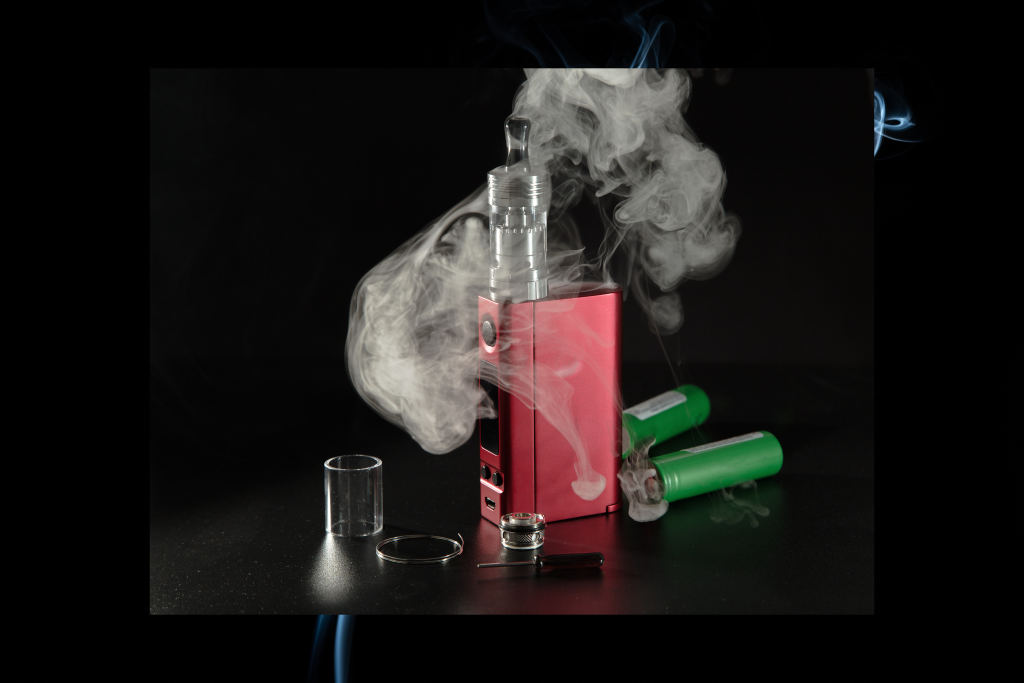
The firing switch closes the circuit by pressing the battery against the contacts. A typical mechanical mod has these parts:
| Component | Common Material | Function |
|---|---|---|
| Tube | Copper, brass or steel | Holds battery; conducts power |
| Top Cap | Hybrid or standard 510 | Connects the atomizer |
| Switch | Metal contact | Controls power flow |
| Sleeves | Metal or resin | Aesthetic customization |
Keeping the threads and contacts clean helps the mod perform consistently.
How Mechanical Mods Work
A mechanical mod has no circuit board or chipset. Pressing the switch completes the circuit, and the battery sends current straight to the coil.
Output is unregulated, so power depends on coil resistance and battery charge. As the battery drains, voltage drops and vapor production falls.
There is also no short-circuit, overheat or low-voltage protection. Users must know Ohm's law to avoid excessive current draw.
Mechanical mods are usually paired with rebuildable atomizers, which let the user set coil resistance.
Safety Considerations and Proper Usage
With no protection circuit, battery handling is the main safety issue. Use only authentic high-drain cells whose continuous discharge rating covers the current your coil draws.
Replace any battery with a torn wrap, damaged insulator or dents. The FDA's vape battery safety tips also say to:
- Only use batteries recommended for your device.
- Never mix battery brands, charge levels, or old and new batteries.
- Charge on a clean, flat surface where you can see the device, never on a couch or pillow.
- Keep your vape out of extreme heat or cold, and never charge it in those conditions.
Store spare batteries in a protective case so they can't touch keys or coins. Make sure the battery goes in the right way round, and lock or remove it when the mod is in a pocket or bag.
Mechanical mods are for experienced adult vapers only. The CDC notes that vape aerosol can contain heavy metals such as nickel, tin and lead, so no setup is risk-free.
Understanding Atomizer Compatibility
On a hybrid connection, the atomizer's positive pin touches the battery directly. Only use atomizers with a clearly protruding 510 center pin. A flush or recessed pin can cause a short circuit.
Matching coil resistance to the battery is critical. Use Ohm's law (I = V / R): a fully charged cell at 4.2 volts on a 0.2-ohm coil draws about 21 amps. That is more than many batteries can safely deliver.
Most users pair mechanical mods with rebuildable dripping atomizers (RDAs) or rebuildable tank atomizers (RTAs). Check every new build with an ohm meter before firing it on the mod.
Sources
- Tips to Help Avoid Vape Battery Fires or Explosions, U.S. Food and Drug Administration
- Health Effects of Vaping, Centers for Disease Control and Prevention